
Prentiss County Arrest Records and Court Charges
A Prentiss County arrest record is the law-enforcement record of an arrest. It shows who was taken into custody, which agency made the arrest, and when booking happened. In Prentiss County, the Sheriff serves as the county jailor and keeps a jail docket, so the arrest and booking side of the story sits with the Sheriff's Office. Sheriff Randy Tolar holds that office. An arrest record can note the booking date, the holding facility, and the initial charges an officer wrote down at the scene.
The county outlines those duties on its Prentiss County Sheriff page, which frames the office as keeper of the peace and county jailor.
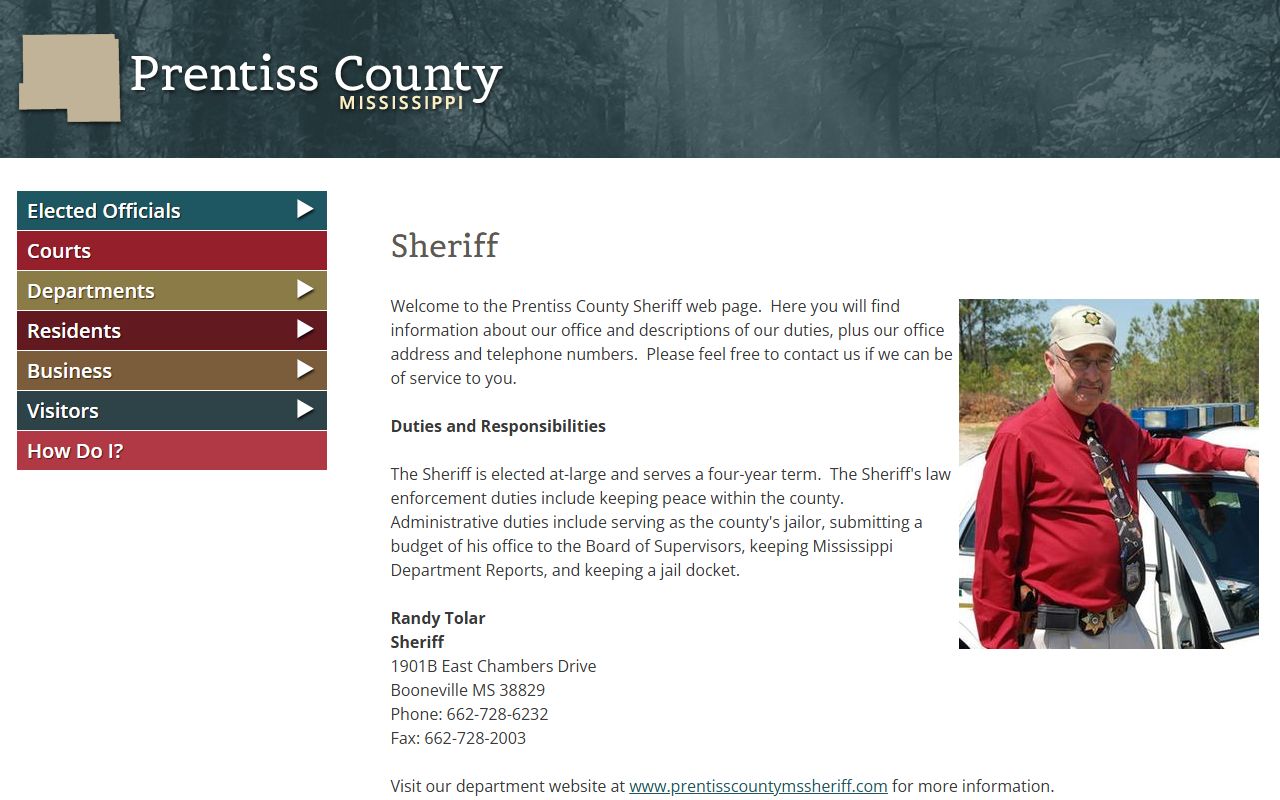
Those jailor duties explain why the booking record and the jail docket begin with the Sheriff, not the court clerk. A court charge record works differently. After an arrest, a prosecutor reviews the case and decides the formal charges to file with the court. Those filed charges become the charge record the clerk keeps. The arrest is one event. The charges can grow, shrink, or change as the case moves. For the jail roster and booking detail, the custody side is covered on the Prentiss County inmate records page. Court charges after arrest are tracked through the case, which is why the two records rarely match line for line.
How to Find Prentiss County Arrest Records and Charges
Finding Prentiss County arrest records and the charges that follow takes more than one channel. The county does not publish a single all-in-one case-search portal. Charges filed in Circuit Court reach the Circuit Clerk and the First Circuit Mississippi Electronic Courts system. Arrest and booking detail stays with the Sheriff and the jail. Knowing which office holds the record saves a wasted trip.
- Decide which record you need: the arrest and booking entry, or the formal court charges filed afterward.
- For filed charges, contact the Circuit Clerk and ask whether the case is on MEC, at a public terminal, or available by copy request.
- For arrest and jail status, call the Prentiss County Jail or use the statewide custody notification service.
- Read each charge's code, severity level, and current status before drawing any conclusion about the case.
The Sheriff's Office announced a mobile app that listed inmate information, including name, photo, and specific charges, plus warrants and VINE integration.
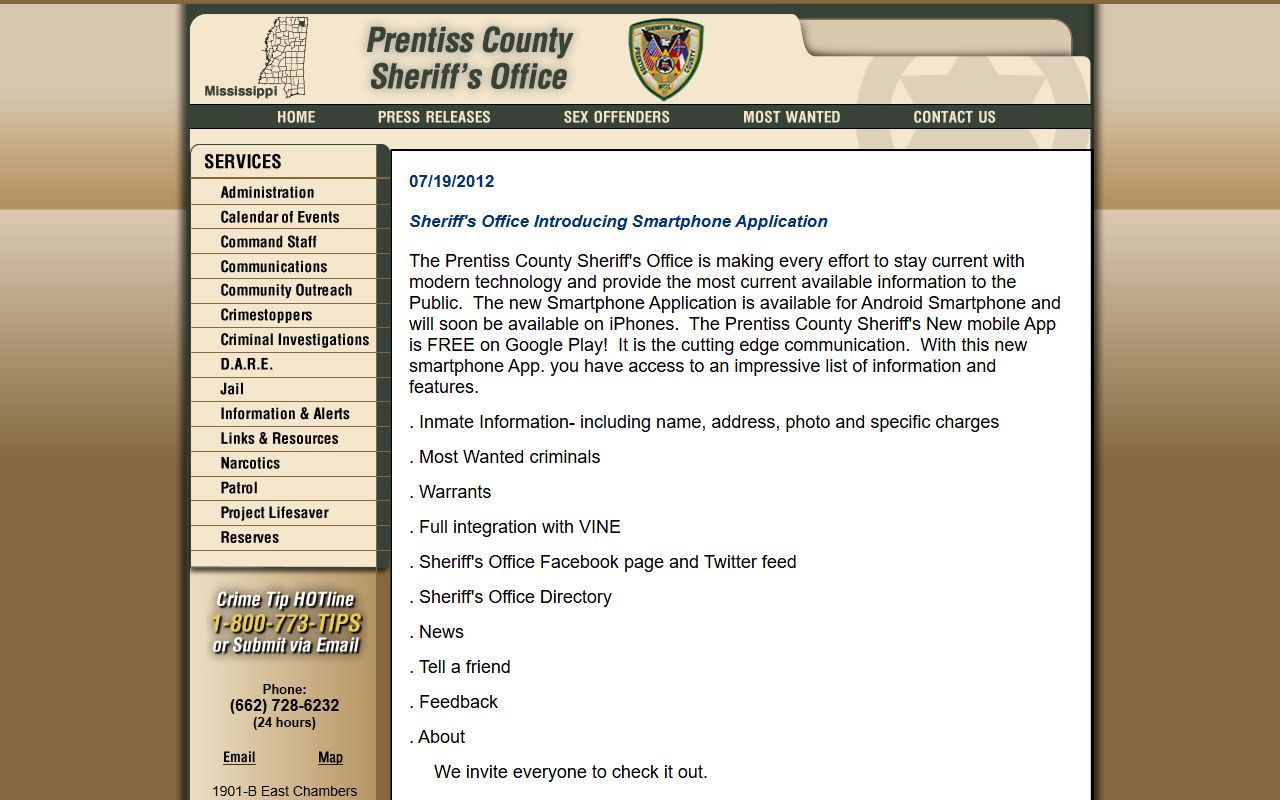
That app feature shows how arrest, charge, and warrant data can travel together. Even so, the court file stays the authoritative source for the charges actually filed.
How Charges Get Filed After a Prentiss County Arrest
An arrest does not set the final charges. In Prentiss County, the County Prosecuting Attorney, Allison Worley, represents the state in felony matters before Justice Court and can present matters to the grand jury. The District Attorney for the First District, John Weddle, handles felony prosecution for the district. After an arrest, one of these prosecutors decides what to file. The charge record begins with a charging document. Three main types appear in Mississippi cases, and each one opens the case in a different way.
| Complaint | Information | Indictment | |
|---|---|---|---|
| Filed By | Officer / Prosecutor | Prosecutor | Grand Jury |
| Common For | Misdemeanors | Many felonies | Serious felonies |
| Starts | The case | The case | The case |
A complaint or affidavit often starts a misdemeanor or a preliminary matter at the Justice Court level. An information lets a prosecutor charge directly in some cases. An indictment comes from a grand jury and is common for serious felonies, which the county lists on its official courts page. A felony case can travel a longer road. Law enforcement makes the arrest, Justice Court may hold preliminary proceedings, and the matter then goes to a grand jury. The grand jury can return an indictment, send the case back, or decline to charge. Once charges are filed, the indictment, pleas, and final disposition build the deeper file kept in the Prentiss County criminal court records.
Charge Codes and Severity Levels
A single arrest can produce several separate charges. Each charge ties to a specific Mississippi statute, and the statute sets the severity. Reading the code matters, because the level shapes the court, the possible penalty, and the access rules. The three broad tiers below cover most filed charges.
- Felonies, the most serious offenses, are prosecuted in Circuit Court and can carry prison time.
- Misdemeanors, lower-level offenses, are often handled by Justice Court or a municipal court.
- Traffic and ordinance violations, the least serious, route through Justice or municipal courts.
One arrest event can mix tiers. A person stopped for a traffic matter might also face a misdemeanor and a felony from the same stop. The charge record lists each count on its own line with its own status. Note: charge codes can change when a prosecutor refines the filing, so the statute number on a booking sheet may differ from the one on the final court charge.
Charge Status and What It Means
Charges shift as a case moves. A count can be amended, reduced, added, dropped, or dismissed. The status field on a court record tells the reader where each charge stands right now. The terms below appear most often in Mississippi case files.
| Status | What It Means |
|---|---|
| Pending | The charge is filed and the case is still open, with no final outcome yet. |
| Amended / Reduced | The charge was changed, often lowered to a lesser offense. |
| Dismissed | The court dropped the charge, so it no longer moves forward. |
| Nolle Prosequi | The prosecutor chose not to pursue the charge. |
The First Circuit Mississippi Electronic Courts system uses flags that mirror these stages. Examples include Nolle Pros Pending, Reduced to Misdemeanor, Bound Over, Plea Pending, and Sentence Pending. A flag is a snapshot, not a final word, and it can change at the next docket entry.
Statewide Charge Lookups for Prentiss County
Some charge and custody information rolls up to the state level. A county case file shows the local charges, but a person sentenced to prison appears in a statewide system instead. The Mississippi Department of Corrections is the agency to check for that custody and sentence history.
The department runs an inmate search that locates sentenced state offenders by name or by MDOC ID number.
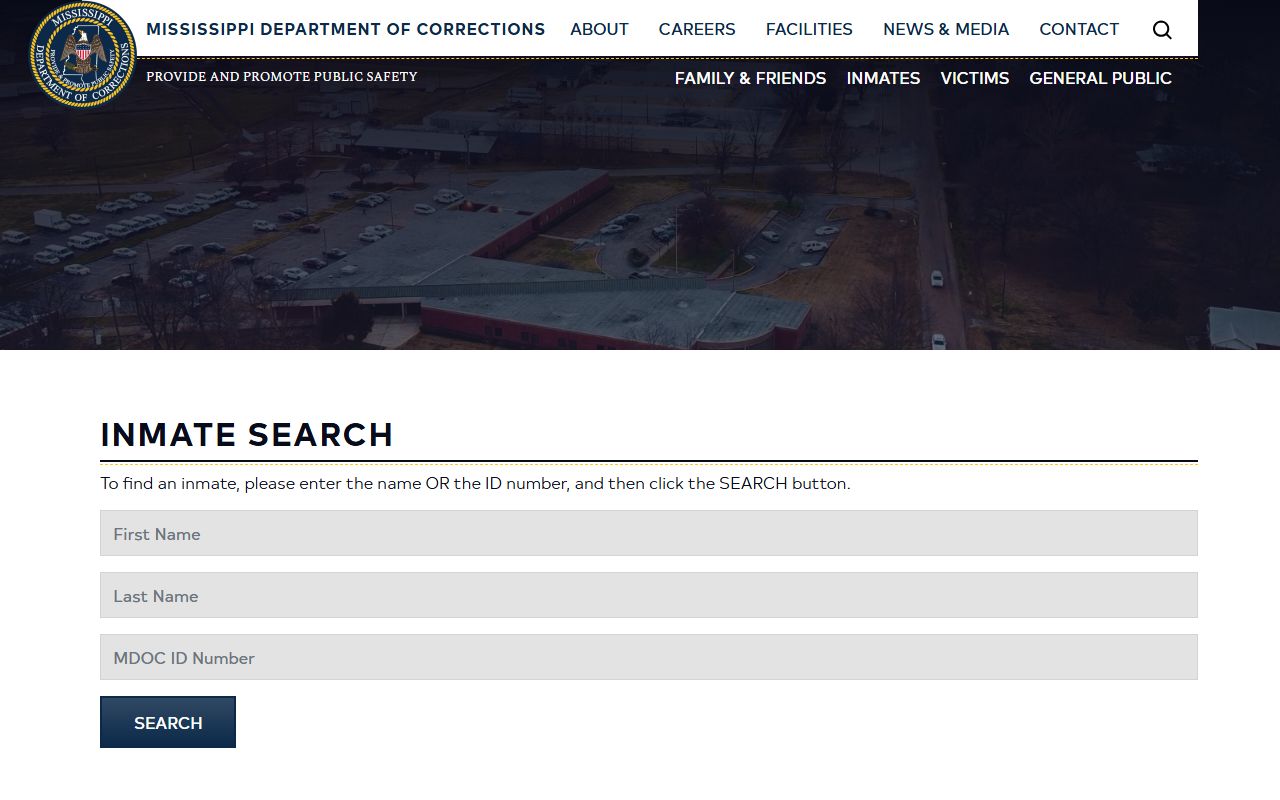
That tool reaches people already sentenced to state custody, not every pretrial detainee sitting in a county jail. For sentence and charge history the online search does not display, the MDOC contact page lists a Records Department in Jackson.
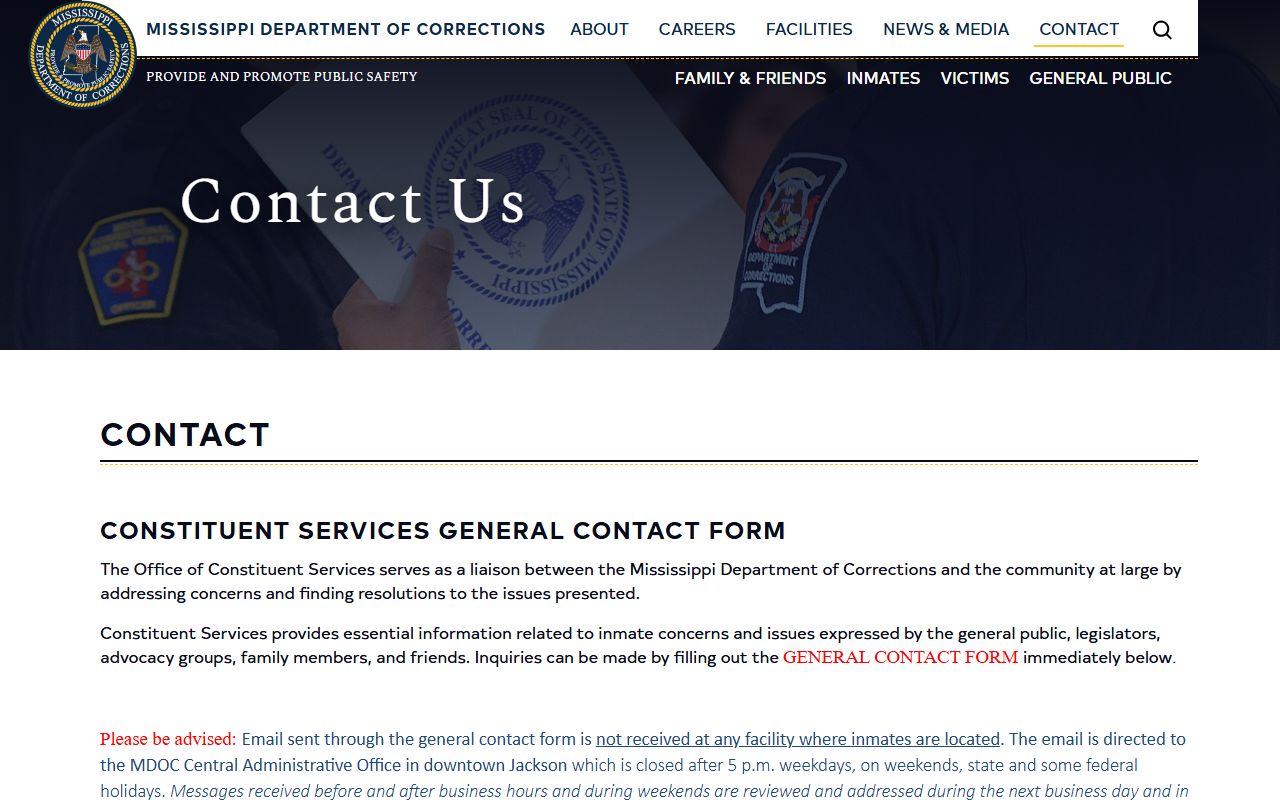
A written request to that department can confirm custody and sentence detail for a state inmate. Note: the statewide inmate search covers sentenced offenders, so a recent local arrest may not show there until the case reaches state custody.
Charges vs. Convictions in Prentiss County
Being charged is not the same as being convicted. A charge is an accusation. A conviction is the result of a plea or a verdict. The chart below sets the two side by side so a reader does not mistake one for the other.
| Charge | Conviction | |
|---|---|---|
| Stage | Accusation | Verdict or plea |
| Burden of Proof | Probable cause | Beyond reasonable doubt |
| Public Record | Yes | Yes |
A defendant is presumed innocent until the case is resolved. Many charges are later reduced, dismissed, or dropped, and some never reach a conviction at all. Treating a filed charge as proof of guilt misreads the record and the law behind it.
Custody Status After a Prentiss County Arrest
After an arrest, custody status can change quickly. A person may be released on bond, held pending a court date, or transferred to another facility. Bond is the security or condition set for release while the case stays open. If a defendant misses a required court date, the court can issue a bench warrant or a capias, and those flags appear in the case record. The Pending Apprehension flag signals that a warrant is out but not yet served. Mississippi SAVIN, the statewide notification service, tracks these changes and can alert a registered caller when an offender's status shifts. The service is anonymous and monitors both state prison and county jail custody.
The corrections department's facilities page lists the prisons and centers that hold sentenced inmates across the state.
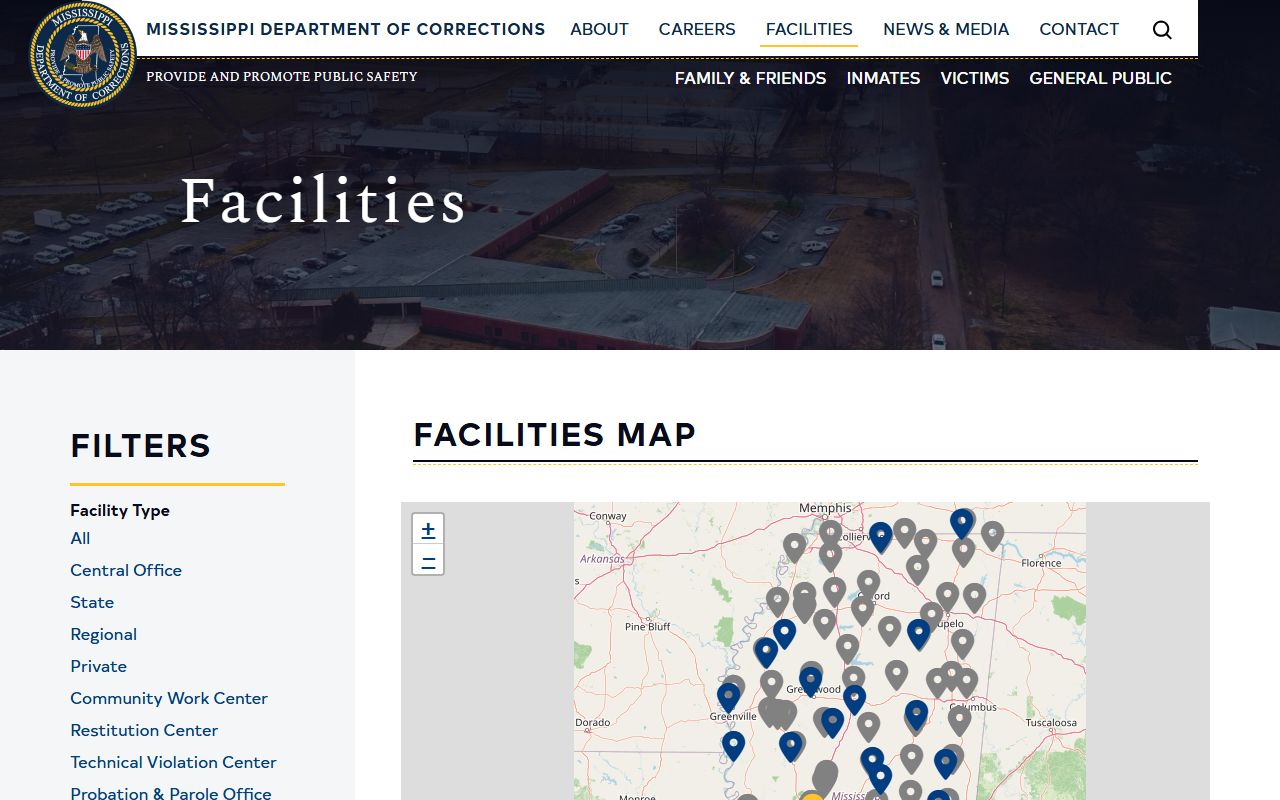
Someone arrested locally may sit in the county jail, the joint work center, or a state facility, depending on the stage of the case. To register for custody alerts, callers can reach Mississippi SAVIN by phone or through VINELink. The service keeps calling until the registrant confirms the message, so it pairs well with a wider safety plan rather than standing on its own.
Background Checks and Arrest Records
A casual lookup and a formal background check are not the same thing. A casual search reads what is publicly posted. A regulated background check follows the federal Fair Credit Reporting Act and is the route for hiring, housing, or credit decisions. Pulling a charge record from a court file does not make that file a compliant consumer report. For employment or tenant screening, the law points to an FCRA-regulated provider, not an informal arrest lookup.
Important: This site is not a consumer reporting agency under the FCRA, and its information cannot be used for employment, housing, credit, or other regulated screening.
Restricted Arrest and Charge Records in Prentiss County
Not every arrest or charge record is open to the public. Youth Court matters are confidential. Sealed cases are hidden by court order. Expunged records are treated as though the charge never existed. Charges tied to an ongoing investigation can also be withheld until the matter resolves. Two terms cause the most confusion, so the definitions below set them apart.
- Sealed
- The record still exists but is hidden from public view, with limited access kept for certain officials.
- Expunged
- The record is removed or restricted so it is treated as if it never happened, with only very narrow access remaining.
Records that are not posted online may take a written request. The Sheriff's contact page warns against sending sensitive information through plain email.
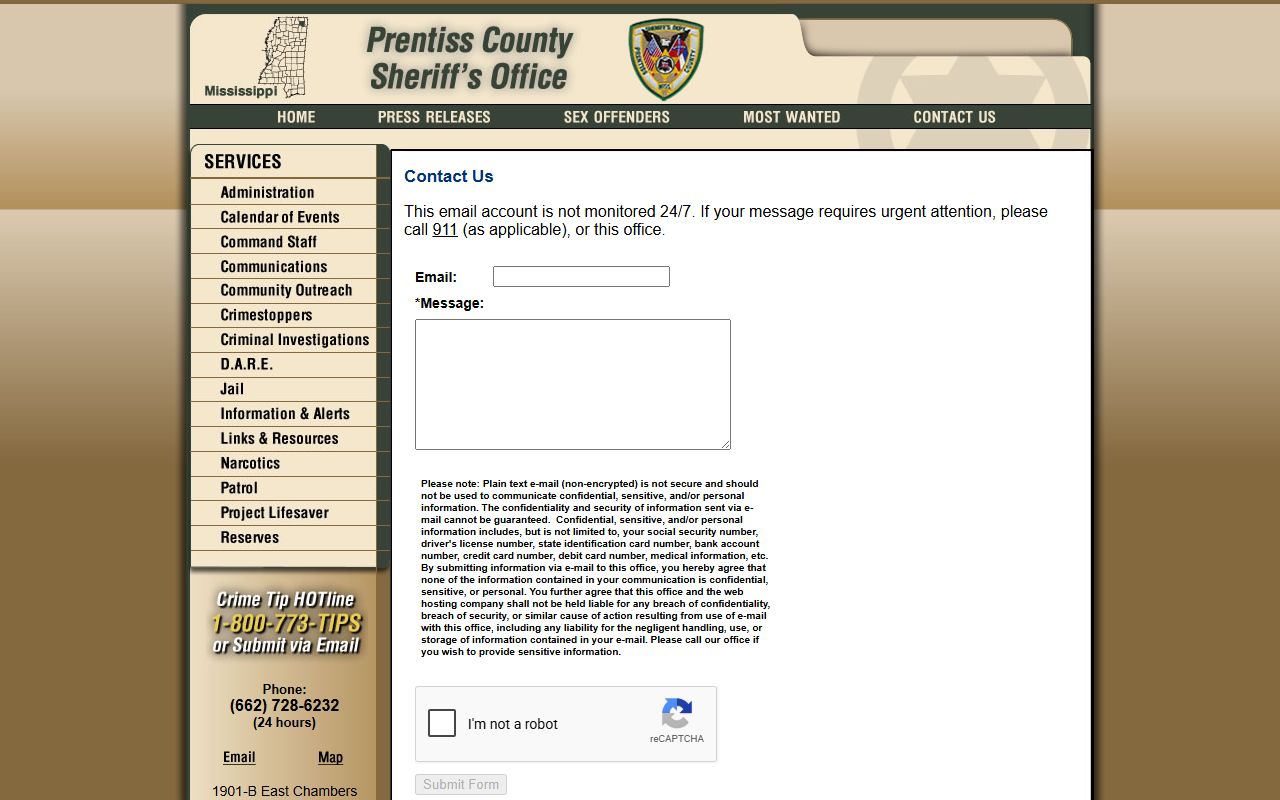
A formal request under the Mississippi Public Records Act is the route when an arrest or charge record is not displayed online. Expunction follows its own path. Mississippi Code Section 99-19-71 sets many eligibility rules, and a person generally files a petition in the court of conviction. Note: a record marked expunged or sealed should not appear in ordinary public search results, so the court of conviction is the place to ask about the petition process.