
What a Prentiss County Court Docket Shows
A docket is a court's official log. Each line marks one event in a single case. The clerk adds a new entry as papers come in and as the judge acts on them. Read from top to bottom, the docket tells the story of a case from filing to close. It names the parties, fixes the dates, and tracks each motion, order, and setting along the way.
A docket is not the full case file. It lists what happened and when. The motions, exhibits, signed orders, and final judgment live in the underlying record. Picture the docket as a table of contents and the case file as the book. Many people only need the docket, since it answers the most common question of all: what is the next court date?
Court files here share a set of terms. A handful turn up on nearly every docket, and a quick read makes the rest easier to follow.
- Docket
- The dated, chronological list of events in one case.
- Motion
- A written request asking the judge to enter an order.
- Order
- The judge's written decision or direction in the case.
- Disposition
- The outcome of a charge or of the whole case.
- Continuance
- A postponement of a hearing or trial to a later date.
- Bench warrant
- An arrest order from a judge, often for a missed setting.
Where Prentiss County Dockets Are Published
The county runs no single all-purpose docket portal. Each court level keeps its own. Circuit Court and Chancery Court files now move through Mississippi Electronic Courts, the statewide e-filing system known as MEC. The Prentiss County Circuit Court went live on MEC on August 22, 2022, and the Chancery Court followed shortly before, on July 25, 2022. Attorneys and parties of record file and view documents inside the system.
The public reaches the same dockets through Public Access to MEC, or PAMEC, which is run from a help desk in Jackson. The broader program is documented on the statewide Mississippi Electronic Courts page, while each district keeps its own court-info page on the First Circuit MEC and First Chancery MEC systems. Justice Court matters, including traffic and county misdemeanors, are not on MEC; that court tracks its own settings and posts contested dates on the county website.
The shift to electronic filing reached the First Circuit District as part of a long statewide rollout. The Mississippi Judiciary marked one such milestone in a judiciary news release on the program's growth across the state.
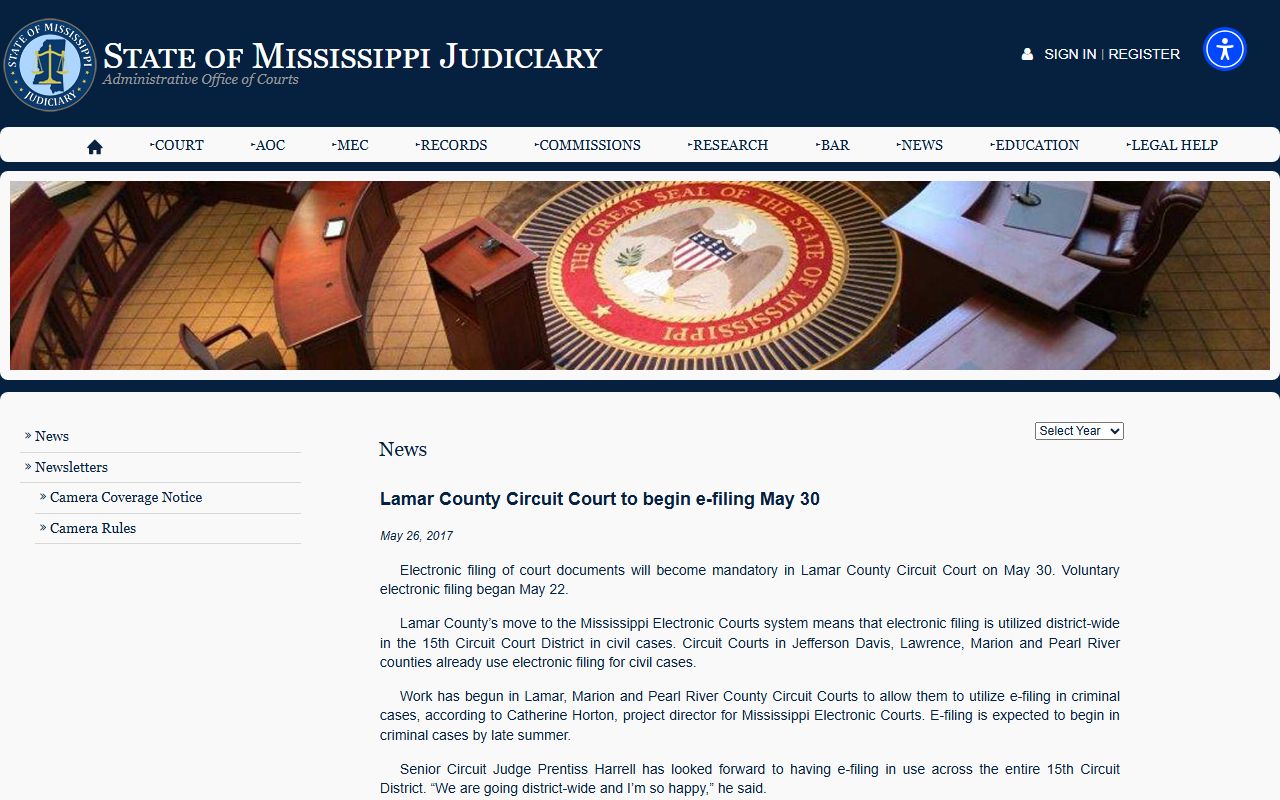
The release shows how the courts framed electronic dockets as a public-service expansion. For Prentiss County, the practical result is that recent Circuit and Chancery dockets are digital, while older paper files may still require a call or a visit to the clerk.
Dockets Versus Full Case Files
People often ask for "the docket" when they really want a single order or a copy of a judgment. The two are linked, but they are not the same thing. A docket scan is fast and usually free. Pulling the full file can mean a copy fee, a certified-copy charge, or a trip to the courthouse counter.
The docket is a list of dated entries. It records events, settings, and status flags, and it is often viewable online. The full case file is the complete set of documents behind those entries: the motions, the signed orders, the judgments, and the proof. That file may take a fee or an in-person review to obtain. In short, the docket is built to track progress and dates, while the case file is built for legal review and certified copies.
For most scheduling questions, the docket is enough. When a record is needed for legal use, the certified document from the proper clerk is what a court will accept. The wider set of filings sits within the broader Prentiss County court records the clerk maintains.
First Circuit Court Calendar Access
The First Circuit Court District, which includes Prentiss County, keeps a trial calendar online. Access is limited. The calendar page states plainly that it is a public service, updated with effort but not guaranteed to be complete or accurate. It does not reflect every setting and is subject to change without notice. To open it, a person needs a registered username and password.
Registration is not automatic. A user requests an account by emailing the district at astewart@leecoms.com. Until the login arrives, the public calendar cannot be browsed directly. The login screen and the disclaimer both appear on the district's First Circuit court calendar page.
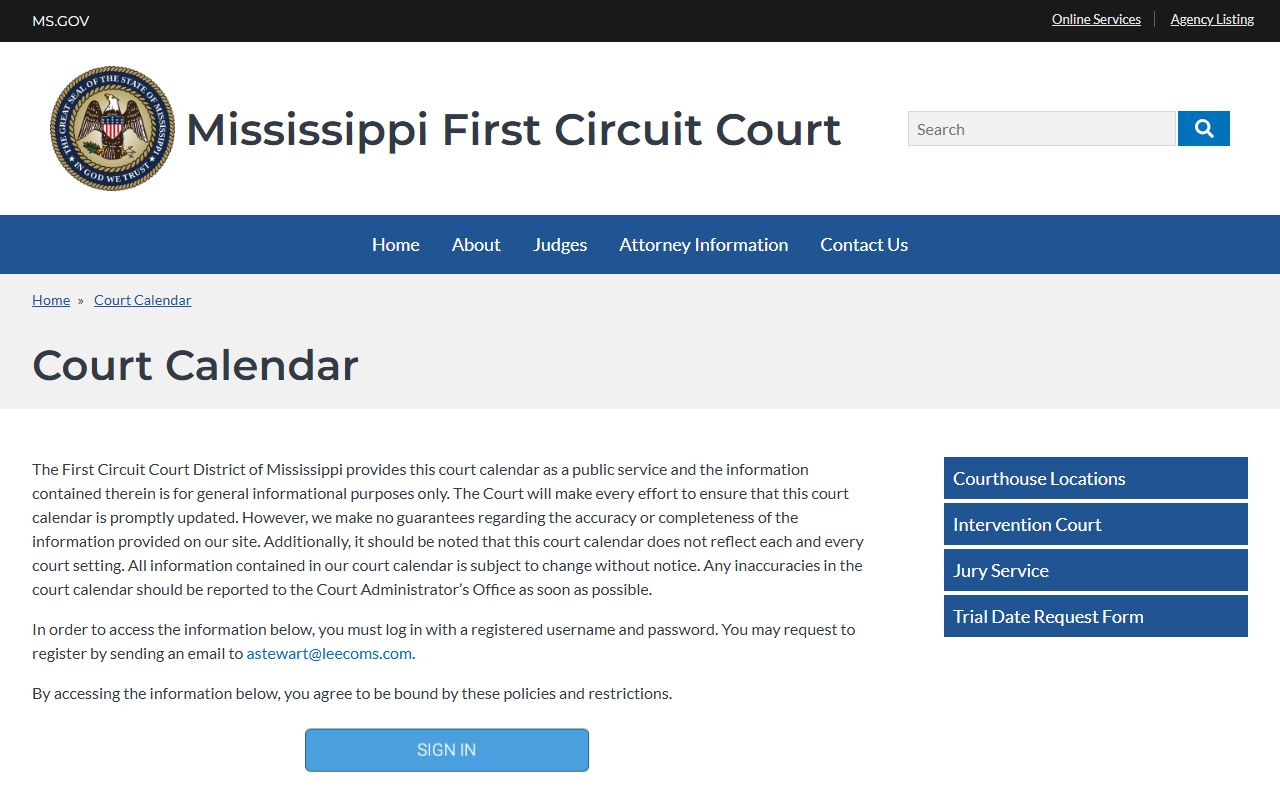
That gated design is why a calendar alone should never be the last word on a setting. The same district publishes its scheduling and filing rules openly. Anyone tracking a felony or civil matter in the Circuit Court can read the procedure even before the calendar opens.
The First Chancery Docket Calendar
Chancery cases follow a different posting style. The First Chancery District publishes a docket calendar that marks each setting by judge using short letter codes. The key is simple once you know it, and it lets a reader tell which chancellor is hearing a given day's matters.
- M stands for Judge Mask.
- B stands for Judge Bailey.
- MM stands for Judge Malski.
- T stands for Judge Tennison.
- (T) marks a term of court.
This matters for divorce, custody, estate, guardianship, and other equity files in Prentiss County, since Chancery Court handles them. The full posting, with month grids and the judge key, sits on the First Chancery docket calendar.
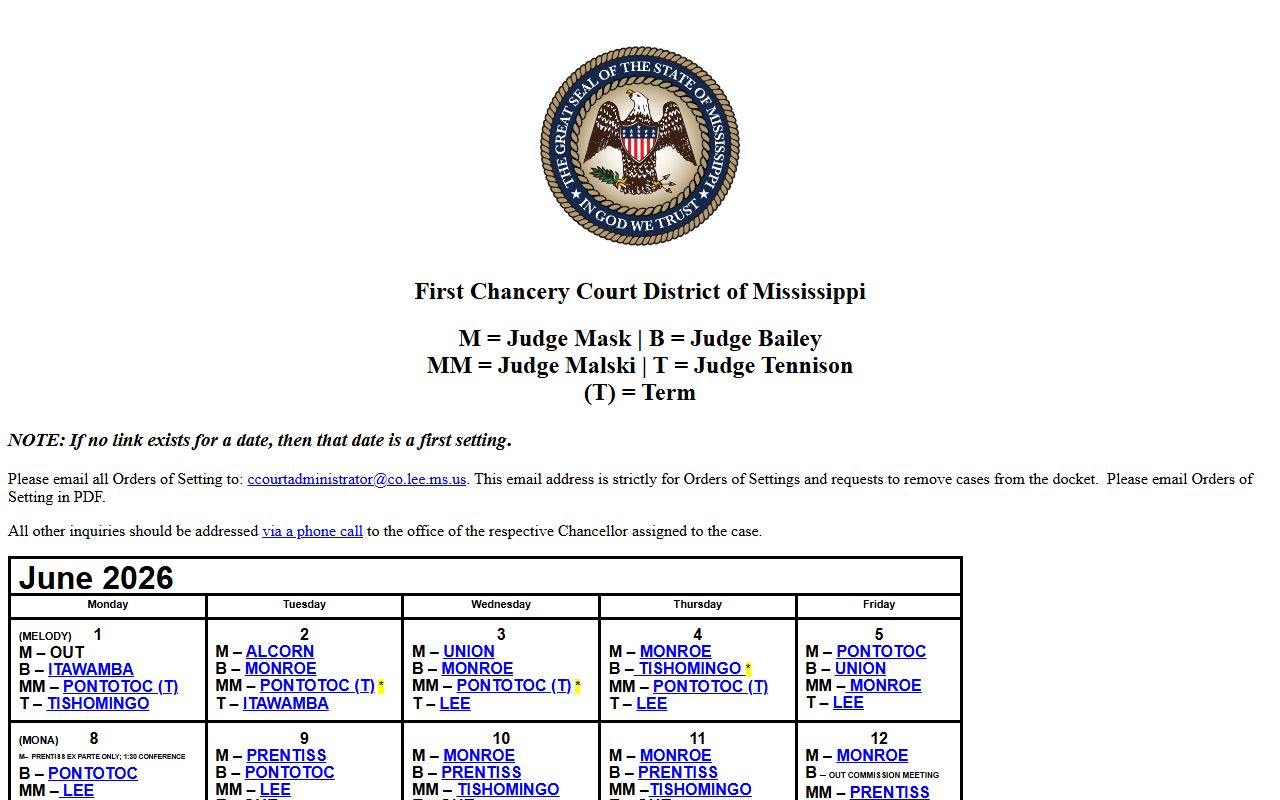
Reading the code first saves time. A line marked B on a Tuesday tells you Judge Bailey sits that day, which helps confirm you are looking at the right setting before you ever call the clerk.
Note: a chancery calendar entry can move when a chancellor reassigns a docket, so confirm both the date and the judge before traveling to court.
Justice Court Contested Dates in Prentiss County
The Prentiss County Justice Court is unusually open about its calendar for a small court. It publishes the year's contested court dates by judge on the county website. For 2025, the court lists settings under two judges, Bishop and Hall, with one date each per month. Contested dates are the days set aside for people who plan to dispute a ticket or charge rather than simply pay it.
| Month | Judge Bishop | Judge Hall |
|---|---|---|
| January | Jan. 8 | Jan. 22 |
| February | Feb. 5 | Feb. 19 |
| March | Mar. 5 | Mar. 19 |
| April | Apr. 9 | Apr. 23 |
| May | May 7 | May 21 |
| June | June 4 | June 18 |
| July | July 2 | July 16 |
| August | Aug. 6 | Aug. 20 |
| September | Sept. 3 | Sept. 17 |
| October | Oct. 8 | Oct. 29 |
| November | Nov. 5 | Nov. 19 |
| December | Dec. 3 | Dec. 17 |
These dates govern traffic, county misdemeanor, and Justice Court civil matters. They are posted on the county's Justice Court Clerk page alongside fine-payment options and courtroom rules. A date that fits your case does not mean you are on the calendar, so a call to the clerk to confirm your own setting still pays off.
How to Confirm a Prentiss County Hearing
A printed or online calendar is a starting point, not proof. Settings change. Continuances happen. The safest path is to verify a date with the office that controls the file. A short, ordered routine works for any court level in the county.
- Identify the court. Felony or civil matters sit in Circuit Court, family and probate in Chancery Court, and traffic or misdemeanors in Justice Court.
- Gather your case details. Have the case or cause number, the party names, and the assigned judge ready before you call.
- Check the right calendar. Use the First Circuit calendar after registering, the First Chancery judge-key calendar, or the Justice Court posted dates.
- Call the clerk to confirm. Ask the clerk that holds the file to verify the date, time, judge, and courtroom in the live record.
- Reconfirm close to the date. Call again a day or two ahead, since a late continuance may not reach a public calendar in time.
The First Circuit District also explains how civil matters and proposed orders move through the court administrator, which affects when a setting actually lands on a calendar. Those steps are laid out on the district's civil matters page.
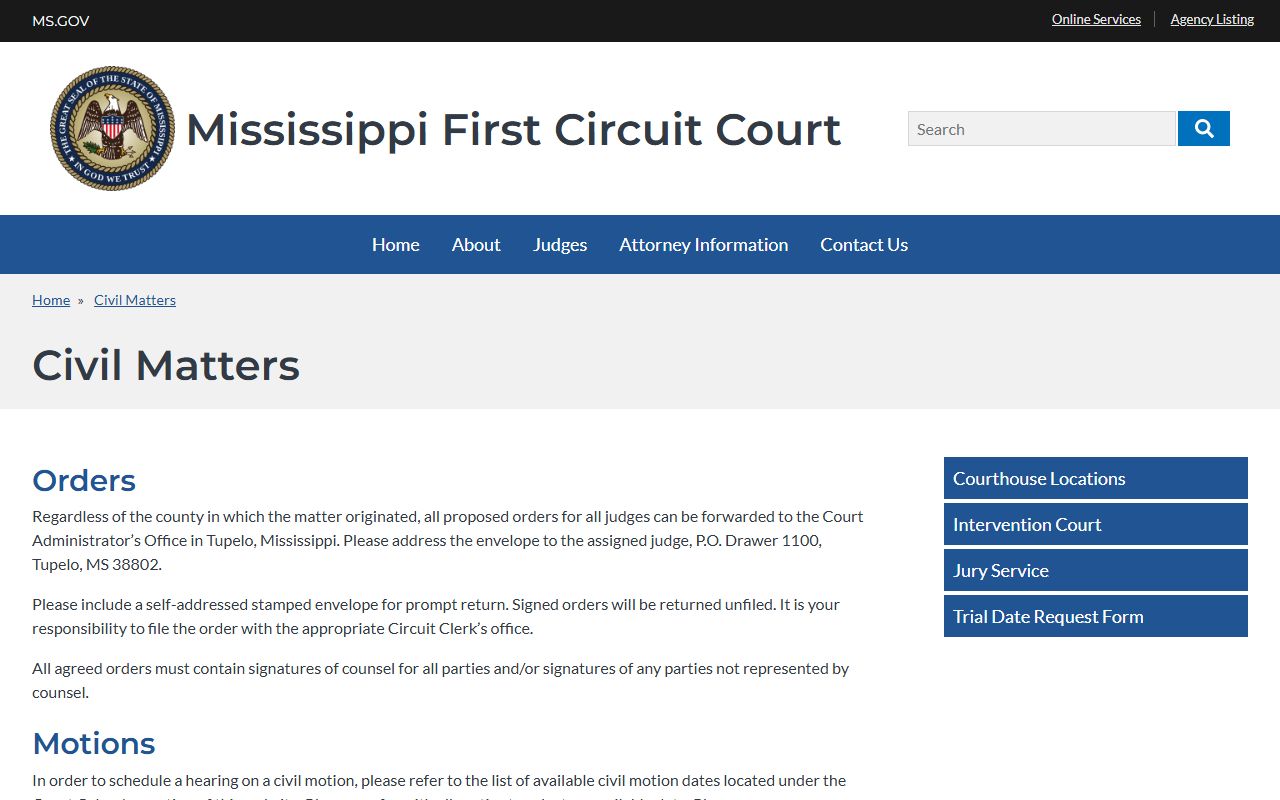
Following that process keeps a scheduling guess from turning into a missed appearance. When the clerk confirms a live date, that answer outranks any calendar grid.
Prentiss County Docket Entries and Case Flags
Each docket line carries a label. Some mark routine events, like a motion or a hearing setting. Others are case flags, short status codes the MEC system attaches to a file. Flags tell a reader at a glance whether a warrant is open, a sentence is due, or a record is sealed. The list below pairs common Circuit and Chancery entries with plain meanings.
| Docket Entry or Flag | What It Means |
|---|---|
| Hearing Scheduled | A future court date is set; note the time, judge, and courtroom. |
| Continuance | A hearing or trial was postponed to a later date. |
| Trial Pending | The case is set for trial and waiting to be heard. |
| Bench Warrant Issued | A judge ordered an arrest, often after a missed setting. |
| Capias Pending | A custody order is open and waiting to be served. |
| Nolle Pros Pending | The prosecutor has moved to drop a charge. |
| Sentence Pending | A plea or verdict is in; sentencing has not happened yet. |
| Sealed Case | The file is closed to ordinary public viewing. |
| GAL (Chancery) | A guardian ad litem represents a minor or protected party. |
| Minor Child (Chancery) | The case involves a child, which limits public detail. |
The First Circuit also posts the rules that govern how these entries are made and how documents must be presented. Anyone reading a tricky docket can check the source rules directly.
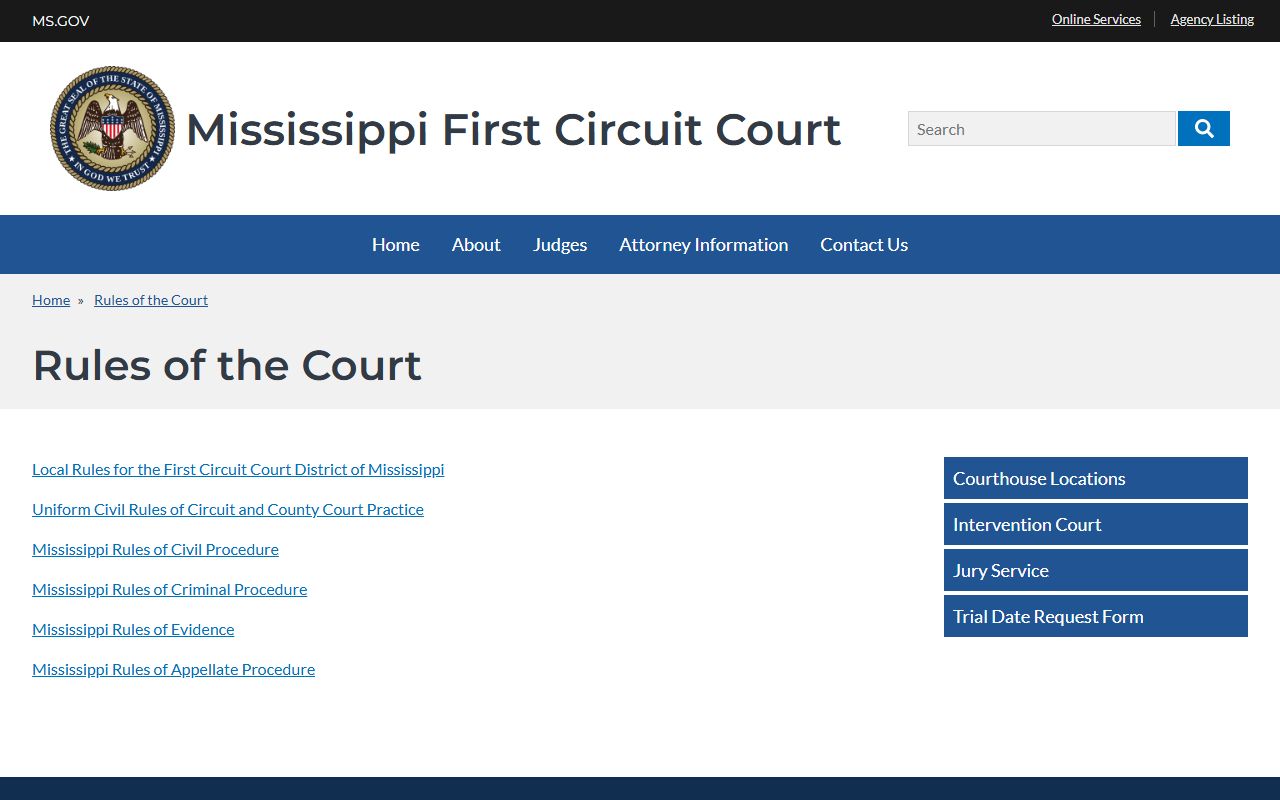
The First Circuit rules of court spell out the local practice behind the flags. Reading them helps explain why a docket entry reads the way it does.
Note: case flags update as a file moves, so a docket viewed last month may now show a new status such as a returned warrant or a closed case.
Missed Court and Bench Warrant Risk
A docket date is more than a calendar note. Missing a required court appearance can trigger a bench warrant. In a criminal or traffic matter, that warrant can lead to arrest, added charges, license problems, or a higher bond. The risk is the strongest reason to confirm every setting twice.
Important: If you have a court date in Prentiss County and cannot appear, contact the clerk or your attorney before the date, not after. A timely continuance request is far safer than a no-show, which can put a bench warrant on the docket.
Bench-warrant and capias flags also show up on the docket itself. If a search turns up "Bench Warrant Issued" or "Capias Pending" on your own case, treat it as urgent and speak with the clerk or counsel about clearing it.
Requesting a Prentiss County Trial Date
Civil cases in the First Circuit do not always get a trial date by default. Counsel can request one through the district's online Trial Date Request Form. The form routes to the court administrator, who coordinates settings across the seven counties in the district, Prentiss among them. Every field except the last is required.
| Field | Required | Notes |
|---|---|---|
| Plaintiff(s) | Yes | Names the party bringing the case. |
| Defendant(s) | Yes | Names the responding party. |
| Cause Number | Yes | The case number assigned by the clerk. |
| Assigned Judge | Yes | The judge presiding over the case. |
| County | Yes | Choose from Alcorn, Itawamba, Lee, Monroe, Pontotoc, Prentiss, or Tishomingo. |
| Plaintiff Counsel | Yes | Attorney for the plaintiff. |
| Defendant Counsel | Yes | Attorney for the defendant. |
| Anticipated Length of Trial | Yes | Estimated time the trial will take. |
| Trial Type | Yes | Jury trial or non-jury trial. |
| Contact Person | Yes | Point of contact for scheduling. |
| Phone Number | Yes | Reachable phone for the contact. |
| Yes | Reachable email for the contact. | |
| Additional Information | No | Optional notes for the court administrator. |
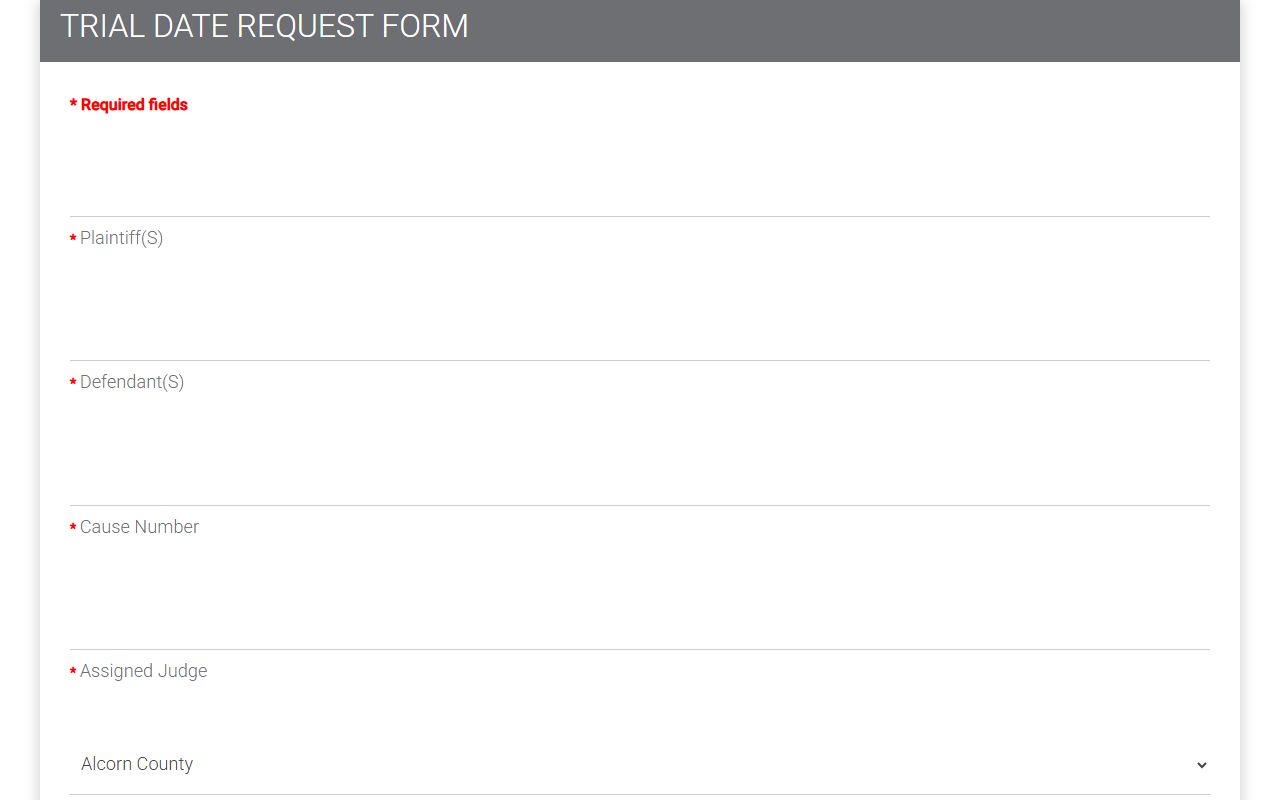
The live form sits on the state portal as the Trial Date Request Form. Once a request is processed, the new setting becomes a docket entry, which loops back to the same rule that runs through every court here: confirm the live date with the clerk before relying on it.