
Checking for a Prentiss County Warrant
There is no public website where you can type a name and pull every active Prentiss County warrant. No county case-search portal exposes warrant records to the open public. That gap is normal for a rural county. It means the fastest path is a phone call to the right office, not a database.
Warrants are held by the office that issued or serves them. The Sheriff handles arrest warrants and most wanted listings. Bench warrants and capias orders sit with the court that signed them. Because of that split, the first step is to figure out which court or agency is most likely tied to the matter, then contact that office directly.
The reliable channels for Prentiss County warrant information are short and worth knowing in order.
- The Sheriff's Office 24-hour phone line for active warrant and surrender questions.
- The Sheriff Most Wanted page for publicly posted suspects.
- The Justice Court Clerk for traffic, misdemeanor, and failure-to-appear bench warrants.
- The Circuit Clerk for felony capias and pending apprehension matters.
- The Chancery Clerk for contempt warrants in family and equity cases.
- A formal public-records request when a record is not shown by phone.
Prentiss County Sheriff Warrant Channels
The Prentiss County Sheriff's Office is the main law enforcement source for arrest warrants. Its phone line, 662-728-6232, is staffed around the clock. Call this number to ask whether a warrant is active, whether a bond is set, and how the office wants a person to surrender. The jail line, 662-728-2016, helps confirm custody status if someone may have already been booked on a warrant.
The Sheriff also keeps a Most Wanted page that lists suspects the office is trying to locate. The posted list can be viewed on the Prentiss County Sheriff Most Wanted page, which offers sorting by name and date. At the time of research the page header was live but the listing area read as unavailable, so call the office if the page shows no entries.
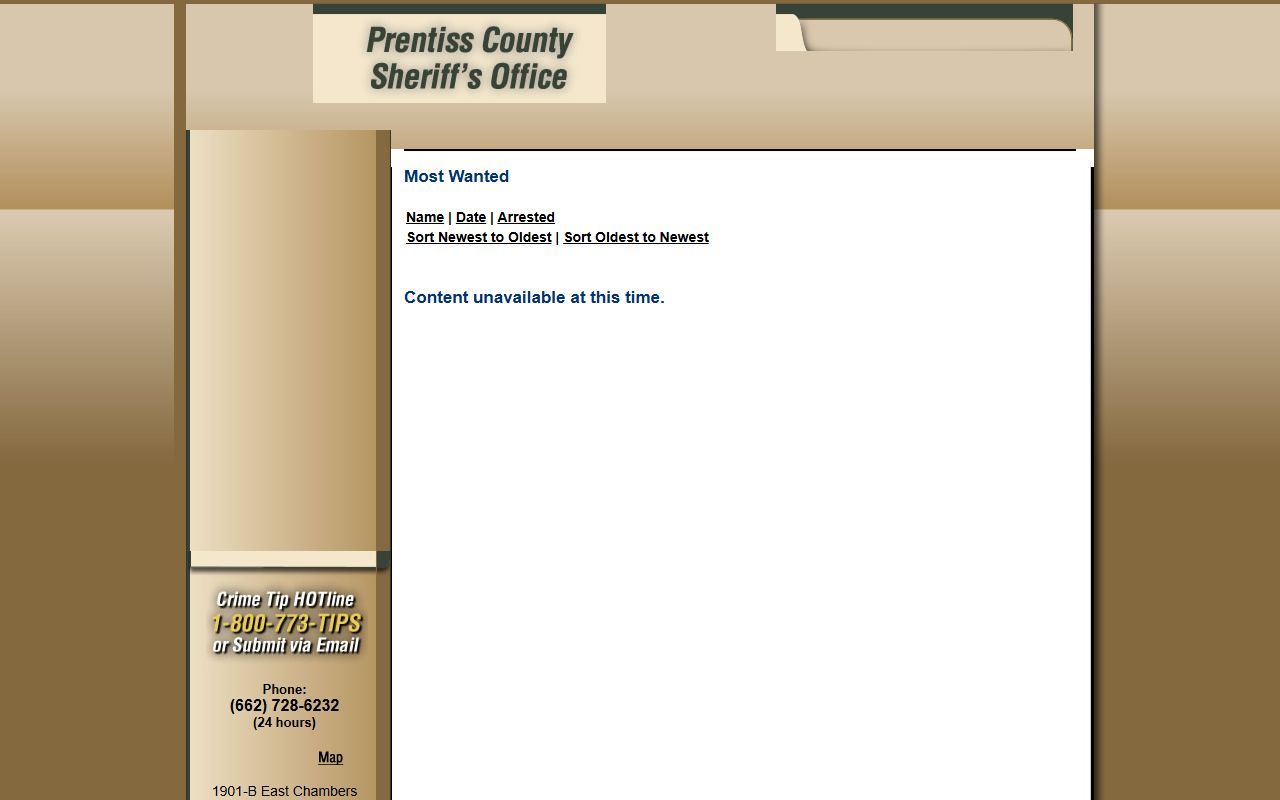
The Most Wanted feature is a public-facing snapshot, not a full warrant index. It shows only the people the Sheriff chooses to publicize. Many active warrants never appear there, so a clear page does not mean a person is in the clear. Treat it as one tool among several.
Note: The Sheriff's Office answers warrant-safety and surrender questions by phone at any hour, which is the surest way to confirm a current status.
The Sheriff App Warrant Feature
The Sheriff's Office announced a mobile app that bundles several public-safety tools. Its advertised features include inmate information, a Most Wanted list, integration with the VINE custody system, and a warrants feature. The app was promoted as a way to carry these lookups on a phone rather than a desktop.
The active warrant lookup is described only as an app feature. No public web version of that warrant tool was located in official sources, and no current app-store link could be confirmed during research. Because of that, the warrant feature should be treated as app-only, and a store page is not linked here. Anyone who finds the app useful can still verify any result by calling the Sheriff directly.
Types of Prentiss County Warrants
Different warrants come from different parts of the system, and the label tells you who to call. A traffic bench warrant and a felony arrest warrant are handled by separate offices. The list below defines the main types you may run into in Prentiss County.
- Arrest warrant
- Signed by a judge so police can take a named person into custody for a charged offense.
- Bench warrant
- Issued from the bench when a person fails to appear, fails to pay, or ignores a court order.
- Capias
- A court order directing law enforcement to bring a person before the court, common in pending felony matters.
- Search warrant
- Authorizes officers to search a place or property, and an unserved one is often not public.
- Fugitive warrant
- Used when a person is wanted by another jurisdiction and may be held for transfer.
Court records may also carry status flags tied to these warrants. Circuit and Chancery case files use markers such as Bench Warrant Issued, Bench Warrant Returned, Capias Pending, and Pending Apprehension. Those flags show that a warrant exists within a case even when no separate warrant page is published.
Prentiss County Justice Court Bench Warrants
The Justice Court handles traffic citations, misdemeanors, and preliminary criminal matters. When a person misses a court date or fails to pay a fine, the judge can issue a bench warrant. To ask about a Justice Court warrant, call the clerk at 662-728-8696. Staff can tell you whether a warrant is tied to a fine, whether a court date can be reset, and what payment the court accepts.
Many Justice Court warrants clear once the underlying fine is paid or the missed hearing is rescheduled. The court takes cash, credit or debit cards, and certified funds. Fines can also be paid online or by phone through an official vendor, which often resolves a failure-to-pay warrant faster than a counter visit.
The online fine option runs through MyFinePayment.com, and the same service answers by phone at 1-877-591-8768. Paying a balance does not always lift a warrant on its own, so confirm with the clerk that the warrant has been recalled after payment posts.
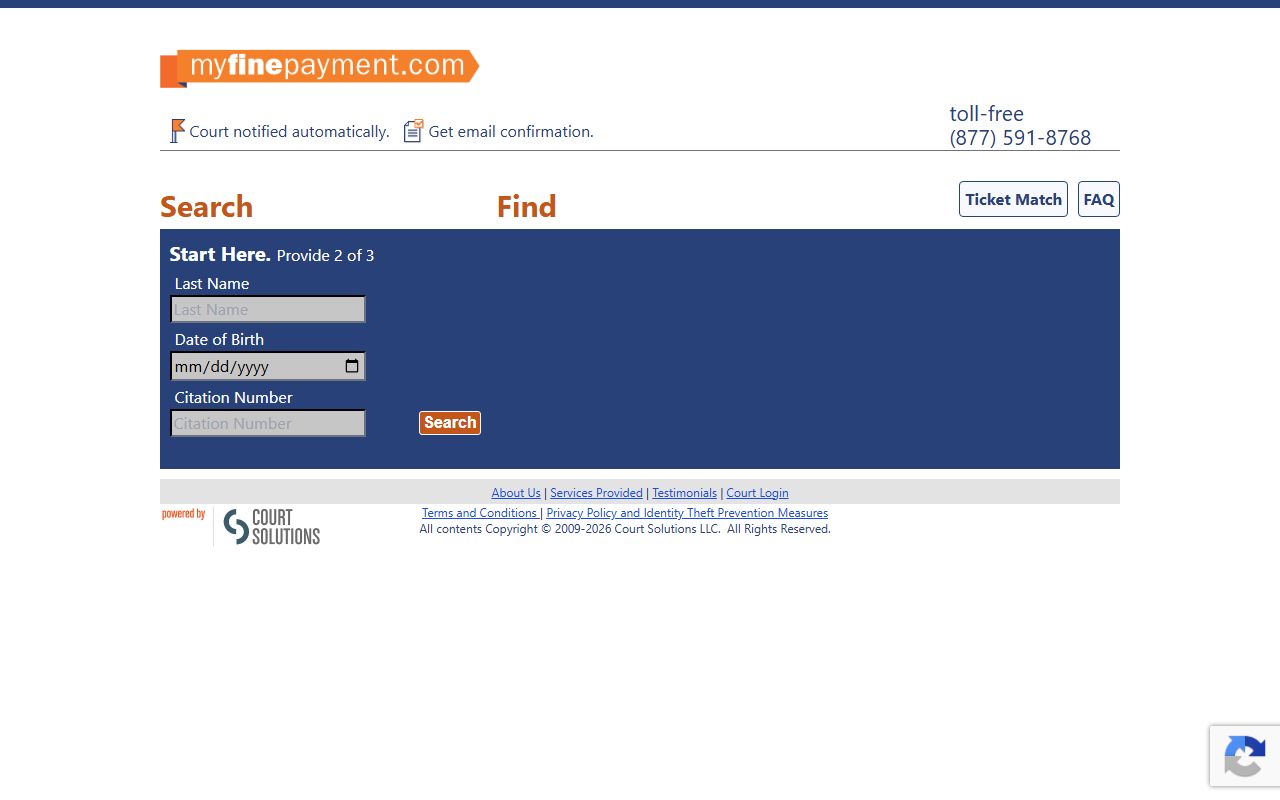
That payment page is run by the Justice Court's official fine-payment vendor, not a private records site. It is the same channel the court points residents to for traffic and misdemeanor balances, which makes it the right place to handle a failure-to-pay matter.
Prentiss County Circuit and Chancery Warrants
Felony matters move through the Circuit Court, and that is where capias orders and felony bench warrants live. The Circuit Clerk, reachable at 662-728-4611, can confirm whether a case carries a Bench Warrant Issued or Pending Apprehension flag and can pull docket information on the underlying charge. Felony warrants often require arrest and booking rather than a simple payment.
The Chancery Court handles family and equity cases, and it issues warrants too. A judge can sign a contempt warrant when a party ignores a support order or another court directive. For a Chancery contempt or capias matter, call the Chancery Clerk at 662-728-8151. The full criminal case behind a felony warrant is tracked in the Prentiss County criminal court records, which a lawyer can review before any court appearance.
Note: Sealed files, juvenile matters, ongoing investigations, and unserved search warrants may not be confirmed over the phone even by the issuing office.
What a Prentiss County Warrant Record Shows
A warrant record ties a person to a charge and to the court that wants them. When an office reads warrant details to you, or when a clerk produces a record after a request, the same core fields tend to appear. Knowing them helps you ask the right questions and write down the right facts.
| Field | What It Shows |
|---|---|
| Person name | The individual the warrant names, sometimes with aliases or date of birth. |
| Charge or case type | The offense or matter behind the warrant, such as a traffic, misdemeanor, or felony charge. |
| Cause number | The court case number that links the warrant to a docket. |
| Warrant type | Arrest, bench, capias, search, or fugitive warrant. |
| Issuing court | Justice Court, Circuit Court, Chancery Court, or another jurisdiction. |
| Status | Issued, returned, pending apprehension, served, recalled, or sealed. |
| Bond | The bond amount set, or a no-bond note. |
| Court date | The hearing date, or the missed date in a failure-to-appear matter. |
| Agency contact | The office to call about the warrant. |
If a warrant leads to an arrest, custody status becomes the next thing to confirm. The statewide VINE service tracks custody and can alert a registered user when a person is booked or released. Custody status can be checked through VINELink, the public side of that notification system.
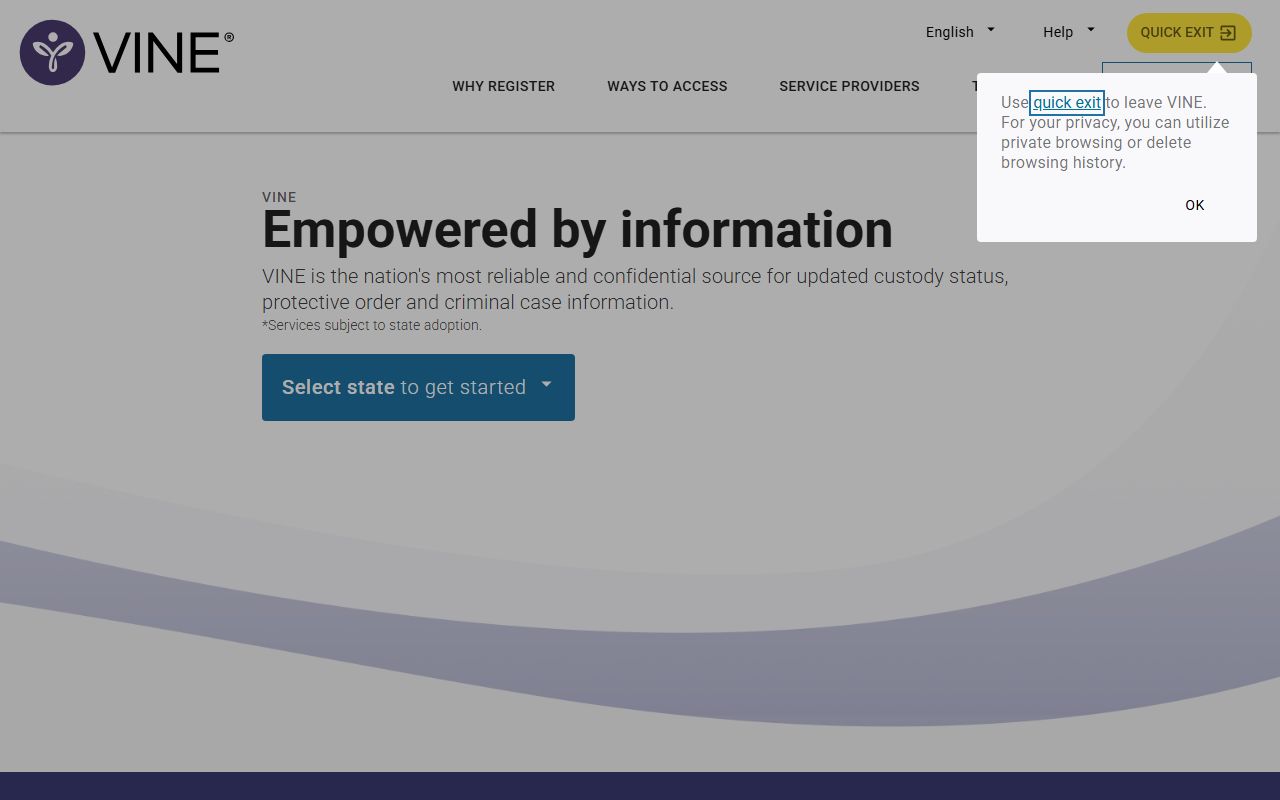
VINE is a custody tool, not a warrant index, so it will not list an open warrant on its own. It becomes useful after an arrest, when family members want to track booking and release. The county jail roster and booking detail sit on the Prentiss County inmate records channels.
Resolving a Prentiss County Warrant
An outstanding warrant does not go away on its own. It can surface at a traffic stop or a routine background check at the worst time. The steps below work through the matter in a calm, orderly way and point you to the office that can actually clear it.
- Do not rely on an unofficial aggregator. Call the Sheriff's Office at 662-728-6232 or the court that may have issued the warrant.
- Identify whether the warrant is tied to traffic and Justice Court, a felony in Circuit Court, a Chancery contempt or family matter, or a city municipal case.
- Ask whether the warrant is active, whether a bond is set, whether a court appearance is required, and whether surrender at the jail or court is needed.
- For a failure-to-pay or failure-to-appear in Justice Court, ask the clerk about fine payment, a reset court date, and accepted payment methods.
- For a Circuit Court matter, ask the Circuit Clerk about the case docket, and ask a lawyer or the court about appearance requirements.
- If the record is sealed or juvenile, accept that public confirmation may be limited and work through an attorney.
Important: Speak with a lawyer before surrendering on a felony or serious warrant, since counsel can arrange the appearance and protect your rights at booking.
Sealed and Juvenile Warrant Limits
Not every warrant is open to the public, and some can never be confirmed by phone. Sealed cases are treated as unavailable unless a judge unseals the file. Unserved search warrants and warrants tied to an active investigation are commonly withheld so the work is not compromised.
Juvenile matters carry the strongest shield. Youth Court records, including warrants tied to a child, fall under Mississippi Code Section 43-21-261, which keeps those files confidential except where law or a court order allows release. Access is usually limited to parties, attorneys, and authorized agencies.
When a record is not visible online or shared by phone, a written public-records request to the Sheriff or the relevant clerk is the proper next step. The request runs under the Mississippi Public Records Act, summarized by the Mississippi Ethics Commission. Even then, sealed, juvenile, and investigative material can be lawfully redacted or denied.
Note: A record marked sealed or expunged should not appear in ordinary public results, so direct questions about those files to the court that handled the case.