
How to Search Prentiss County Traffic Court Records
There is no single online database that lets the public type in a name and pull every Prentiss County traffic case. Official county and court sources do not publish a complete citation-search tool. So the practical route starts with the court that holds the file. For almost all county tickets, that court is the Prentiss County Justice Court, and the fastest channel is the fine-payment system the court already runs.
The county routes fine payment to an outside vendor and lists a phone line for the same purpose. To read a case in full, contact the traffic clerk, visit the Justice Court counter, or file a written public-records request. Have your citation handy first. The ticket lists the citation number, the charge, the court, and a court date, which makes any lookup much faster.
The county service page that points drivers to fine payment and clerk contacts sits on the Prentiss County public-service FAQ, which also answers common questions about courts and county offices. The screenshot below shows that county resource.
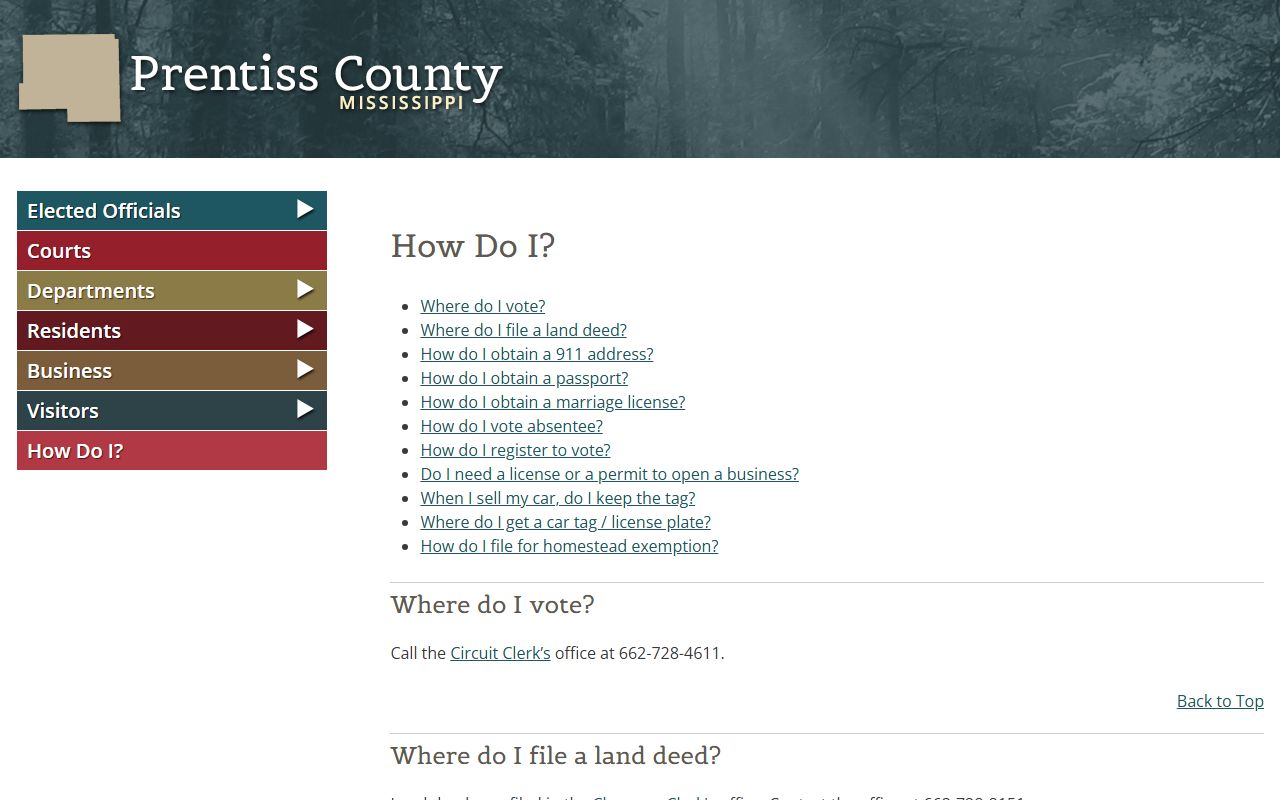
That page is a good starting point because it links the offices that actually hold traffic files and explains which county department answers which question. The table below lays out the citation lookup and payment channels the Justice Court publishes.
| Channel | Type | Details |
|---|---|---|
| Pay Fine Here | Online payment link | County page routes to MyFinePayment.com |
| Phone payment | Toll-free line | 1-877-591-8768 |
| Traffic clerk | Email contact | pcjtraffic@co.prentiss.ms.us |
| In person | Counter visit | Justice Court, 1901C East Chambers Drive |
Note: the vendor payment form fields were not published on the county page, so confirm what details you need to enter before you start a Prentiss County traffic citation payment.
Which Courts Handle Prentiss County Traffic Cases
The Prentiss County Justice Court is the main venue for county traffic citations and fines. It also hears county misdemeanor and small civil matters. The office sits east of downtown on East Chambers Drive, not at the main courthouse on North Main Street, so a driver with a ticket should head to the Justice Court rather than the Circuit Clerk counter.
City police write some tickets inside municipal limits, and those citations go to that city's municipal court instead of the county Justice Court. No official city-court case portal turned up in the county source set, so the safest move is to read the court name printed on the citation and call that court. When a Justice Court traffic conviction is appealed, the matter moves up to Circuit Court, where the Prentiss County Circuit Clerk keeps the appellate case file.
Prentiss County Justice Court
1901C East Chambers Drive
Booneville, MS 38829
662-728-8696
Fax: 662-728-2009
Traffic clerk: Katherine Wardlow, pcjtraffic@co.prentiss.ms.us
Hours: Monday to Friday, 8am to 5pm
The Justice Court operates as part of the broader First Court District serving northeast Mississippi. The First Chancery Court District site offers regional court information for that area. Its home page appears below.

That district resource helps drivers understand how local courts connect, though traffic tickets themselves stay with the Justice Court clerk or the municipal court that issued them.
Types of Traffic Cases on Record
Traffic files at the Justice Court cover a wide span of driving offenses. Most are misdemeanor or minor violations that end with a fine and court costs. A few rise to a criminal charge that routes elsewhere. The category of the offense shapes the fine, the chance of a court date, and whether a missed payment can trigger a warrant.
- Moving violations - speeding, careless driving, running a signal, and similar offenses tied to how a vehicle was operated.
- Equipment and registration - faulty lights, no proof of insurance, or an expired tag noted by an officer.
- License offenses - driving without a valid or current license, or with a suspended one.
- Seat belt and safety - restraint and child-seat citations written during a stop.
- Serious traffic crimes - charges like DUI that move toward criminal court rather than a simple fine.
Each citation enters the court record under its own number. That number ties the charge, the court date, and the payment status together, which is why the citation is the key to any later lookup.
What Prentiss County Traffic Court Records Show
A traffic court file is a case record, not a driving summary. It holds the details of one citation as it moves through the Justice Court. The clerk records the charge, the schedule, the plea, the outcome, and the money owed. If a driver skips court or a payment, the file also notes the enforcement action that followed.
Most fields a driver cares about appear in the table below.
| Field | What It Shows |
|---|---|
| Citation Number | Unique number that identifies the ticket and links every record entry. |
| Driver Name | The cited driver named on the citation. |
| Charge / Statute | The traffic offense and the code section the officer marked. |
| Court Date | Scheduled appearance or contested hearing date set by the court. |
| Plea | Guilty, not guilty, or no contest entered by the driver. |
| Disposition | Outcome of the charge, such as paid, dismissed, or convicted. |
| Fine and Court Costs | Amount assessed and the balance still owed. |
| Payment Status | Whether the fine is paid, partly paid, or unpaid. |
| Warrant Action | Any failure-to-appear note, bench warrant, or capias issued. |
The court file does not list a driver's full statewide history or current license status. Those sit on a separate state record, which is covered further down.
How to Pay or Contest a Prentiss County Traffic Ticket
The first task is to read the citation and confirm which court has the case. A Prentiss County Justice Court ticket is paid or contested through the East Chambers Drive office. A city ticket goes to the municipal court that issued it. The court system bills payment through an outside vendor and a toll-free line, and the clerk also takes payment at the counter.
Drivers who want to fight a ticket should reach the traffic clerk well before the deadline printed on the citation. The Justice Court publishes a contested calendar set by its judges, but a driver should always confirm a personal court date with the clerk rather than rely on the general schedule. The official fine link routes to MyFinePayment.com, the vendor the Justice Court uses for citations.
- Read the citation to find the court name. A Prentiss County Justice Court ticket uses the East Chambers Drive office and 662-728-8696; a city ticket uses that municipal court.
- To pay, use MyFinePayment.com, call 1-877-591-8768, or pay the clerk in person by cash, card, or certified funds.
- To contest, contact the traffic clerk before the deadline and confirm your own court date.
- Follow the courtroom rules at the hearing, including no cell phones and no recording.
- If you miss court or a payment, a bench warrant or capias may issue, so call the clerk right away.
- For a certified copy of the disposition, request it from the court that handled the citation.
The Justice Court lists the payment methods it accepts for fines. The table below sets them out.
| Method | How It Works |
|---|---|
| Online | Pay through MyFinePayment.com from the county fine link. |
| Phone | Call the toll-free payment line at 1-877-591-8768. |
| Cash | Accepted at the Justice Court counter. |
| Credit or debit card | Accepted for fine payment. |
| Certified funds | Money order or cashier's check accepted by the clerk. |
Courtroom Rules for Traffic Appearances
The Justice Court publishes firm courtroom rules, and they apply to anyone who shows up to contest a ticket. The court asks for dignity, respect, and quiet decorum. Plan to arrive early and dress for court. A few rules surprise first-time visitors, so it helps to know them in advance.
- No cell phones, and no audio or video recording.
- No food, drink, or sunglasses in the courtroom.
- Proper dress only, with no shorts, flip flops, tank tops, or exposed midriffs.
- No offensive slogans or clothing that advertises alcohol or drugs.
- No children unless the presiding judge grants prior permission.
Note: a clean appearance and a quiet phone go a long way, since the judge sets the tone for every contested traffic matter on the docket.
Failure to Appear and Bench Warrants
Missing a court date or a fine deadline carries real weight in Prentiss County. When a driver does not appear or does not pay, the Justice Court can note a failure-to-appear action and ask the judge to issue a bench warrant or a capias. Both are court orders that can lead to an arrest and can complicate a license. The traffic file records that action right alongside the citation.
The fastest fix is contact. A driver who realizes a date was missed should call the Justice Court at 662-728-8696 and speak with the traffic clerk. Many situations can be resolved by setting a new date or arranging payment before the matter escalates. Waiting only adds cost and risk.
DUI and DWI Traffic Charges
A driving-under-the-influence charge is treated far more seriously than an ordinary ticket. These cases carry criminal exposure, not just a fine, and they often move beyond the simple traffic docket. A first offense can still involve the lower court, while felony-level charges head toward Circuit Court through the grand jury.
Because the outcome lives in a criminal file, the full charge, plea, and sentencing detail show up with the Prentiss County criminal court records rather than the traffic ledger. A driver facing a DUI should treat the matter as a criminal case and confirm the court and date in writing.
Court Traffic Record vs State Driver Record
Two different files describe one driver, and people often confuse them. The court traffic record is the case file the Justice Court keeps for a citation. The state driver record is a separate file the Mississippi driver licensing agency keeps, and it summarizes a person's license status and reported convictions. A win or loss in court eventually feeds the state record, but they are not the same document.
The comparison below shows how the two records differ and where to go to fix an error in each.
| Point | Court Traffic Record | State Driver Record |
|---|---|---|
| Record source | Justice Court, a municipal court, or Circuit Court on appeal | Mississippi driver licensing agency |
| What it shows | Citation charge, court date, plea, disposition, fine and costs, payment status, any warrant | License status, reported convictions, suspensions, and administrative history |
| Where to access | The Justice Court clerk, the county fine link, or in person at the counter | The state driver licensing agency, through a separate request |
| How to correct errors | Ask the court that handled the citation to review and amend its file | Contact the state driver licensing agency directly |
The state driver record sits outside this county court system, so its fees, forms, and request steps are set by the state agency and are not published in the county court sources.
Public Access to Traffic Court Records
Mississippi treats most court records as open to the public, and traffic files are no exception. When no online lookup exists, the practical rule is to ask the office that holds the file. For a Prentiss County traffic case, that is the Justice Court clerk. A written public-records request is the formal channel when the clerk cannot answer a question at the counter.
The state's open-records framework backs that access, with limits for sealed, expunged, and juvenile material. The county may also charge for the actual cost of finding and copying records. The key statutes appear below.
Key Statutes:
Miss. Code Ann. § 25-61-1 et seq. - the Public Records Act makes nonexempt public records open to inspection by any person.
Miss. Code Ann. § 25-61-7 - a public body may charge the reasonable actual cost of searching, copying, and mailing records.
Note: youth court, sealed, and expunged traffic matters should not appear in ordinary public search results and are released only when a judge or statute allows it.
Sealing or Expunging Traffic Records
Some drivers want a past charge removed from public view. Mississippi allows expunction of certain records by petition, and the process starts in the court where the case was handled. For a Justice Court misdemeanor or traffic matter, that means filing with the Justice Court clerk. Eligibility depends on the offense, the outcome, and waiting periods, so the court decides each petition on its own facts.
The controlling statute is Miss. Code Ann. § 99-19-71, which sets eligibility and exclusions for expunction. A granted order removes or restricts public access, so an expunged ticket should not surface in routine searches. Court forms and filing resources for the regional district are posted on the First District files and resources page, shown below.
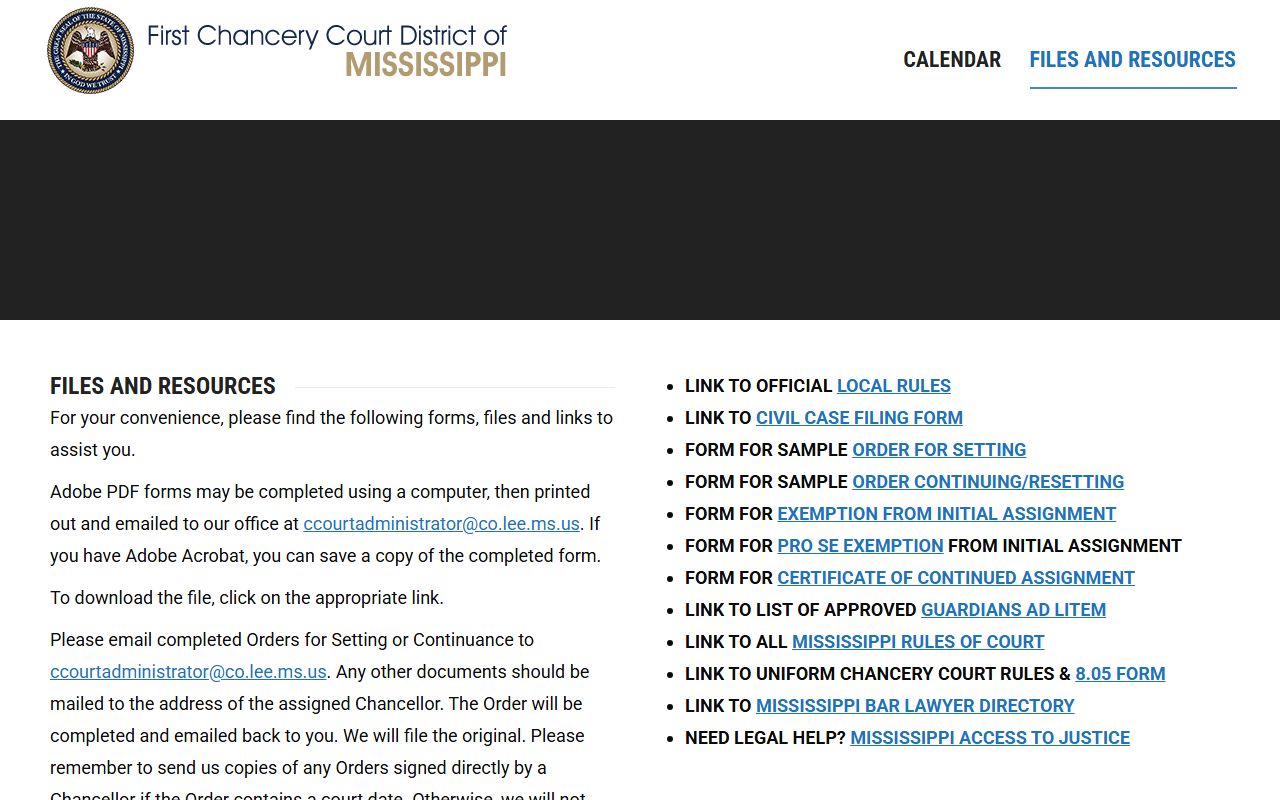
Those resources help with general court forms, but a traffic expunction petition still must be filed with the Prentiss County court that entered the original disposition.